
Real Estate Market After the Gulf War: Challenges, Recovery, and New Opportunities

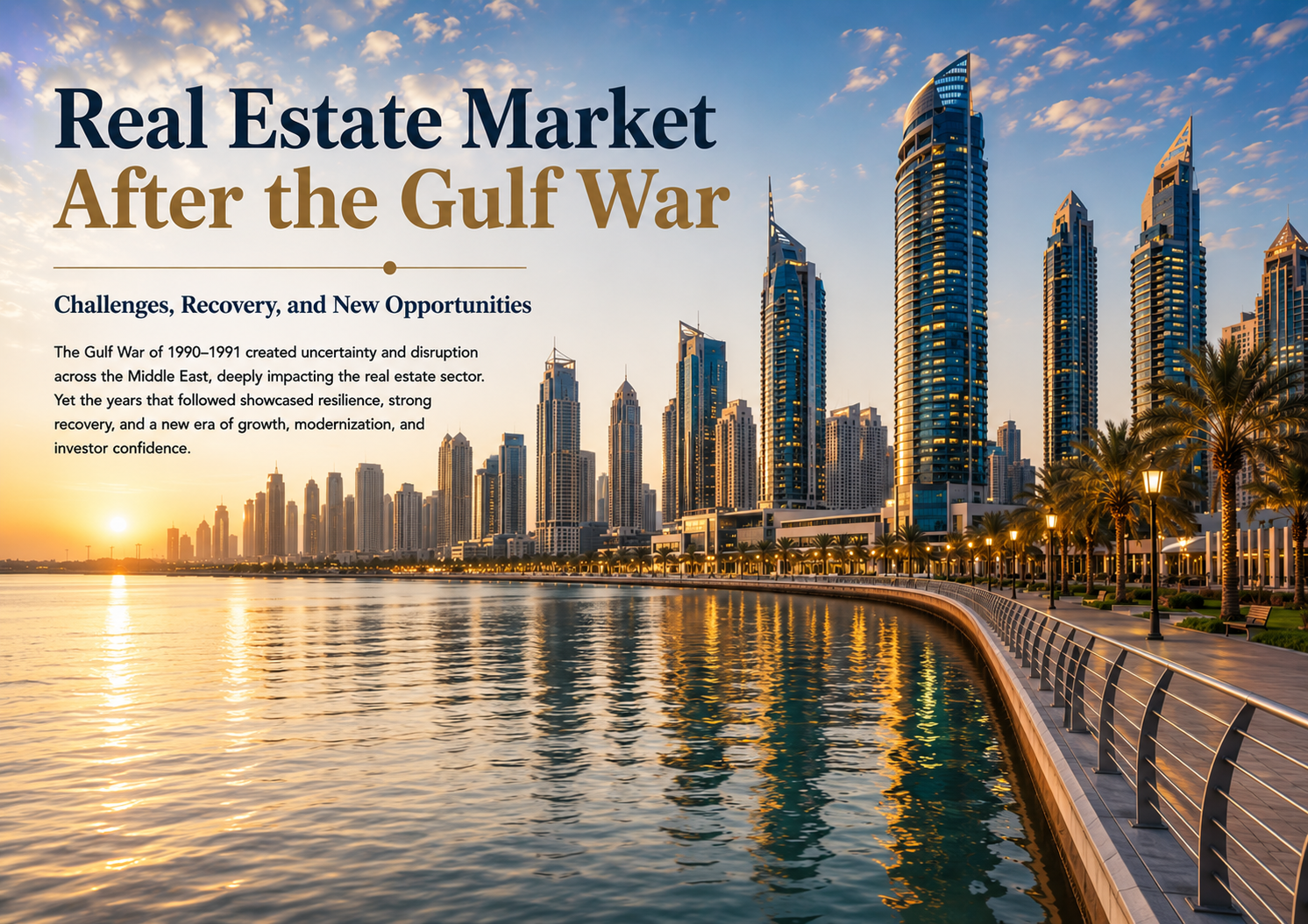
The Gulf War of 1990–1991 had a profound impact on economies across the Middle East, and the real estate sector was among the industries most affected. Political uncertainty, economic disruptions, and changing investment patterns caused property markets to slow significantly. However, the years that followed demonstrated the resilience of the real estate industry, leading to renewed growth, modernization, and increased investor confidence.
Immediate Impact on the Real Estate Market
The Gulf War created widespread uncertainty that affected both residential and commercial property markets. Construction projects were delayed or abandoned as developers struggled with rising costs, labor shortages, and limited financing. Many investors postponed purchasing decisions due to concerns about regional stability.
Property values declined in several affected areas, while demand weakened as businesses and expatriates relocated or delayed expansion plans. The hospitality and commercial real estate sectors were particularly impacted because tourism and business activities slowed considerably during the conflict.
Economic Recovery and Market Stabilization
Following the war, governments across the Gulf region introduced economic recovery measures to rebuild infrastructure and restore investor confidence. Public investment in transportation, utilities, and urban development created a strong foundation for renewed real estate growth.
Improved political stability encouraged both domestic and international investors to re-enter the market. Banks gradually resumed lending activities, making financing more accessible for developers and homebuyers.
Infrastructure as a Growth Catalyst
One of the most significant outcomes of the post-war recovery was increased government spending on infrastructure. New highways, airports, ports, business districts, and residential communities transformed cities into attractive investment destinations.
Large-scale infrastructure projects not only improved connectivity but also increased land values in surrounding areas, creating opportunities for residential, commercial, and mixed-use developments.
Rise of Foreign Investment
As confidence returned, several Gulf countries implemented reforms that encouraged foreign direct investment. Relaxed ownership regulations, free economic zones, and investor-friendly policies attracted international developers and institutional investors.
Cities such as Dubai, Abu Dhabi, Doha, and Riyadh experienced rapid expansion as multinational companies established regional headquarters and expatriate populations increased.
Evolution of Modern Real Estate
The post-war period marked a shift toward planned urban development. Developers began focusing on integrated communities featuring residential, commercial, retail, educational, and recreational facilities within a single master-planned environment.
Sustainability, modern architecture, smart infrastructure, and high-quality amenities became essential components of new developments, reflecting changing consumer expectations.
Lessons for Today's Market
The recovery following the Gulf War demonstrates that real estate markets are highly resilient. While geopolitical events may create temporary disruptions, long-term fundamentals such as population growth, infrastructure investment, urbanization, and economic diversification continue to drive demand.
Investors who focus on strategic locations, government-supported development corridors, and long-term market trends are often better positioned to benefit during periods of recovery.
Looking Ahead
Today's Gulf real estate market is significantly stronger and more diversified than it was during the early 1990s. Major cities continue to attract global investment through ambitious development programs, smart city initiatives, and economic diversification strategies.
The experience following the Gulf War highlights an important principle: although conflicts can temporarily slow market activity, well-planned recovery efforts, infrastructure investment, and sound economic policies can transform challenges into long-term opportunities. For investors, developers, and homebuyers, understanding these historical cycles provides valuable insights for making informed real estate decisions in an evolving global market.